I am Howard Tripp and have been training in Tai Chi for 26 years. I teach Traditional Chen Style Tai Chi in Winchester, Hampshire.
Tai Chi and Qi Gong have numerous health benefits as well as applications and techniques for improving posture, balance and even self-defence. Tai Chi is accessible to people of all ages and fitness levels and requires no special equipment. The ultimate goal is to gain a deeper understanding and control of your body, and to find a natural way to relax and alleviate stress.
With regular attendance at class, and home practice, you will progress through a number of different exercises and slowly start to unlock the connections. Tai Chi beginners classes start regularly in Winchester and new learners are always welcome. For people totally new to my classes, I offer an introductory free taster session with no obligation. Please contact me using the form for more information, and I will be delighted to help you. If you have a question do check the FAQs page.
The origins of Tai Chi
Tai Chi (also spelt Tai Ji or Tai Qi) was created around 1610 AD by Chen Wangting and is the unification of two ancient Chinese traditions.
Firstly, the melting pot of interchanging Chinese kung fu styles and medieval military techniques. For example, both Chenjiagou (the birthplace of tai chi) and the famous Shaolin temple are neighbours in Henan province. Throughout the ages people have been fighting, duelling, sharing knowledge and incorporating the best techniques into their own art.
Secondly, Taoist philosophy and the numerous different schools of thought and temples. All had meditations and exercises to strengthen, cleanse and realign the body as the monks sought harmony with nature, inner peace and enlightenment.
Chen Wangting discovered that if you embody the principles of harmony and the paradox of yin and yang, it resulted in a highly effective martial art. An enlightenment moment for martial arts. The Chen clan became widely respected fighters and bodyguards as a result. The art form was then passed down through the clan as a guarded secret relatively unchanged over the last 400 years. My teacher Grandmaster Wang Haijun is the 12th generation after Chen Wangting.
Benefits and principles
Tai Chi has a dual nature. It benefits both health and is also a martial art, and is generally characterised by slow flowing and graceful movements. It relies on technique, balance and suppleness. Tai Chi is called an internal martial art as the intentions of the practitioner are directed inward to their own bodies. This is as opposed to external martial arts such as karate where force and awareness are directed externally towards an opponent. It can be practised martially with a view to its applications for self-defence, or with the focus on a gentle exercise system for health and relaxation. Both work together, and practising one gets the other for free.
True tai chi is a complete system incorporating stretching, strength training, coordination, muscle tone as well as ever more refined inner balance, calmness and relaxation. Essentially it is a solo practice based around a sequence of movements, called a form, each of which trains a different movement or part of the body. Tai Chi training also includes partner work, where the emphasis is on sensitivity and empathy. Equally there are weapons forms (swords being the most common). Although these obviously originated out of military needs in ages past, they still serve to train hand–eye coordination.
Worldwide growth
Since tai chi is suitable for people of all ages (being particularly popular with older generations) and requires little or no special equipment, it has gained an enthusiastic reception all over the world. The number of tai chi practitioners worldwide is now phenomenal, and has grown exponentially since the 60s when the “veils of secrecy” first started to be lifted. When performed in a slow and relaxed manner, the tai chi hand form offers a balanced and gentle workout for the body’s muscles and joints. The complex yet subtle movements help to develop concentration and a tranquil state of mind. Deep breathing helps to promote greater oxygenation of the blood and improve circulation generally. If practised regularly, tai chi can form the basis for an ideal preventative healthcare regime to enhance longevity and happiness.
What is Chen Style?
Tai Chi is split into five major styles (Chen, Yang, Wu, Sun and Wu/Hao). All of the styles have a great deal in common, with the same philosophy and fundamentals, but each has a slightly different emphasis. As an analogy, you can think of styles as being similar to denominations (Catholic, Methodist, CoE etc) in Christianity; each one is distinct yet they all share a common set of core principles, and to an external observer, the differences may appear quite subtle.
Chen Style is the oldest and original style of tai chi, from which all the other styles derive and branched off at various points in history. To this day, the home of Chen is still Chenjiagou (Chen village) in China, whose inhabitants were renowned for their martial arts ability. Chen is the most external of the internal tai chi styles, with many of its movements having much more obvious martial arts application compared to other styles. Chen Style is also characterised as being low and having the most variable speed, i.e. although it is predominantly slow, there are occasional fast fa-jing movements.
Chen Style is itself split into a number of sub styles, with even more subtle distinctions between them. Broadly there are big frame and small frames and old and new forms. I teach old-style, big frame, which is arguably as close as it is possible to get to original tai chi. And many people do argue about it! That is not to say that this is the “best” style - each style has strengths and weaknesses, this is just where I have chosen to locate myself.
In my opinion, Chen is the most complete style and overall syllabus. There are a number of foundation exercises (called silk reeling) that capture the core principles of the longer tai chi forms. Equally there are a large number of advanced weapons forms, all of which work together and enhance one another as an integrated system. I’m constantly discovering how some advanced technique has been there in the foundation exercises all along, apparently hiding in plain sight. This coherence of progression is the great strength of Chen Style. Its weakness is that it can be more physically demanding than the other styles, which may put off people who are primarily interested in relaxation.
Finally I will reiterate that the differences between the styles are subtle, and to all intents and purposes are irrelevant for someone completely new to tai chi. In the first few years of learning tai chi your choice of style is insignificant and the skills that you learn will be directly transferable should you choose to switch.
What is Qi Gong?
Qi Gong (also spelt Chi Gung, Chi Kung and Ch’i Kung) is a powerful system of healing and calisthenics that originated in China. It is the art and science of using breathing techniques, gentle movement, and meditation to cleanse, strengthen, and generally improve your health.
Qi Gong translates as energy/breath exercises or energy/breath work. It is a term which encompasses many disciplines and has a documented history going back approximately 2,500 years. It ranges from systems that consist largely of standing still to dynamic systems including tai chi. The common thread is the objective of developing strength and power of mind and body, without exhausting and straining the body in the process. Typically exercises focus on one of five different categories:
Relaxation and stress reduction
Curing illness and promoting health
Enhancing vitality and developing internal force
Promoting youthfulness and longevity
Expanding the mind and the intellect
Spiritual cultivation
Qi Gong in my classes is mainly centred around the set of silk reeling routines. Silk reeling focuses on spiralling and circular movements and cultivation of the six harmonies. The 3 external harmonies relate to the coordination and connections between joints. The 3 internal harmonies are about the mind, concentration and intention. Further exercises work on the eight powers or eight martial kinetic energies. The theory is deep, but the exercises are relatively simple. But as with everything in tai chi, just because it is simple doesn't mean it is easy!
When & where are tai chi classes?
When
Where
Map
Price
Tuesdays, 7–8:30pm (Continuing)
Milner Hall, St Peter’s Church, St Peter Street, Winchester, SO23 8BW.
Experience shows that it is a more rewarding experience for beginners to join at the same point thereby creating a friendly peer group to learn together. There are therefore a number of start dates throughout the year, where people new to tai chi are encouraged to start. However, if you have some experience of tai chi, it may also be possible to join in the classes outside of these times.
Prices and Taster class
Beginners classes cost £8 each and are run as blocks of 10 weeks. Payment is due in advance on the first week of each new block and can be paid in cash, by cheque or online transfer/standing order. Payment in blocks in advance is designed to foster a sense of commitment and motivation, but of course people occasionally have other things booked in the diary. In these cases, people can let me know the dates of absence at the first class of the block, and I’m happy to reduce the fees pro-rata.
Before running the beginners class there will be an opportunity to attend a free “tai chi taster” class that will follow the same structure as a normal class with a bit of extra introduction. These classes are free and are intended as a “try before you buy” scheme, as for many people this will be their first experience of tai chi. To keep class sizes manageable I typically run a small waiting list.
Please contact me for more specific information as I would be delighted to answer any questions or add you to the mailing list.
Equipment
Tai Chi classes require no special equipment or clothing. For your first class it is advisable to wear loose fitting, comfortable clothes, such as T-shirts and tracksuit bottoms, along with trainers or other comfortable shoes. The aim is to ensure that you can bend, stretch and move your body without being restricted by your clothing in any way. Choose comfort over style! It is also a good idea to bring along a small bottle of water.
Class format
Classes generally start with some warm-ups and loosening followed by the core foundation exercises (silk reeling). The second half of the class will then move on to learning and practising the tai chi form, starting at the beginning and gradually adding new movements as the classes progress. Finally the class may end with some relaxing and meditative Qi gong exercises.
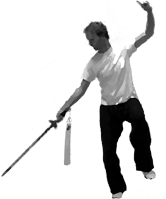
Some weeks we will spend more time focusing on particular exercises, postures or sequences and classes do not stick rigidly to the above format. Other aspects of tai chi are also taught such as partner work (push hands), tai chi walking exercises, stretching, meditation and some basic self-defence applications. After you have been studying tai chi for a few years, there will also be the opportunity to learn some classical weapons forms using a Chinese sword (safe retractable or wooden ones are available to begin with!)
Parking & directions
Milner Hall where classes take place
Unfortunately there is no dedicated parking outside the Milner Hall or at St Peter’s Church. However there are three public car parks (and a small number of spots on St Peter Street) that are within easy walking distance of Milner Hall. Being the centre of Winchester, parking is tightly monitored so do check the signs! The closest car park is Jewry Street, next to the library, but it is also the smallest and frequently full (especially if the theatre has a production) but you can get lucky! Tower Street is only a couple of extra minutes’ walk away and is a large multi-storey car park for which there is invariably availability. Similarly St Peter’s will pretty much always have spaces. Winchester City Council — city centre car parks
FREE evening parking is available if you are prepared to walk an extra couple of minutes from the Zone 2 car parks. River Park and Worthy Lane / Cattle Market being the closest.
Walking from the Library
Cross the road and walk down towards St Peter’s Church
Bear to the right of the church and round the outside of the adjoining glass-walled cafe/hall
Turn right through the gate and head down a couple of steps
Milner Hall is down the short path on the right
Walking from St Peter’s Street
Walk down St Peter’s Street heading into town from North Walls Road/Leisure Centre
Look for the Milner Hall hanging sign on the right-hand side
Go straight through the gate and into the hall
Who is Howard?
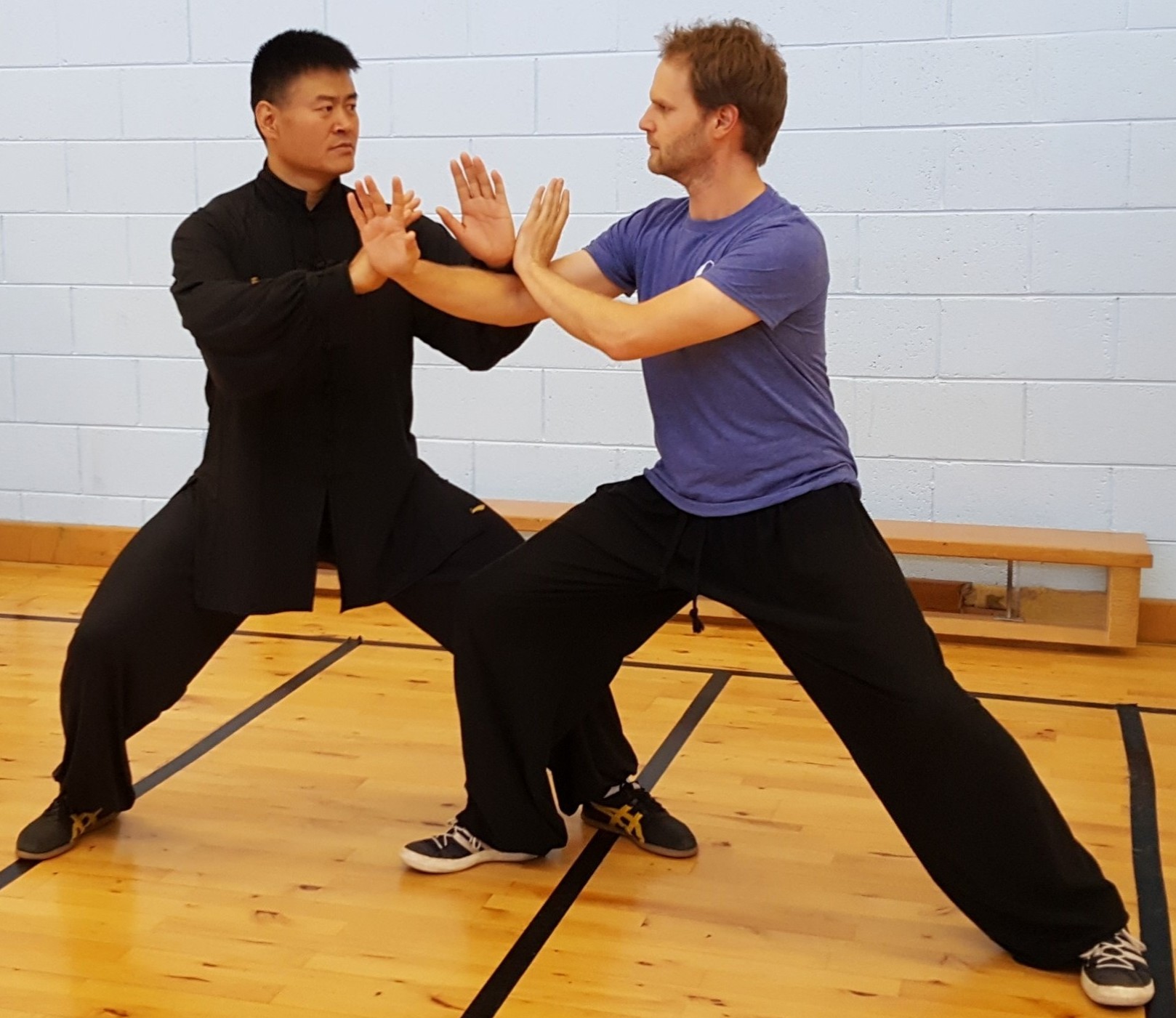
Practising a push hands drill with Master Wang Haijun
My name is Dr Howard Tripp and I am the founder of SpiralWise Tai Chi based in Winchester. I have been training in tai chi for 26 years, and for 22 of those years under the direct tutelage of Grandmaster Wang Haijun, who is an official lineage holder of Chen Style Tai Chi (12th generation).
I am a Grade A qualified instructor with the Tai Chi Union of Great Britain, and have been running my own classes for 15 years having taught informally as a senior student before that. Teaching an internal art like tai chi is extremely rewarding both because the subtlety makes it challenging and because you only discover how well you know something when you try to explain it! I therefore enjoy continuously trying to improve my effectiveness as a teacher, which of course means trying to better recognise the needs of my students.
I teach and predominantly train in authentic and traditional Chen Style Tai Chi. However over the years I have trained and practised with many other styles and teachers, from whom I have learnt a great deal. Other styles/disciplines that I occasionally incorporate into my teaching include spiralling qi gong, gao style bagua, and yang style. Over the years I have also practised yoga, pilates and meditation, which I feel all complement my tai chi practice.
Links and Resources for students
Online videos
Grandmaster Wang Haijun (my teacher) sells online streaming videos. They aren't explanatory or an online course as such, but they are likely the ideal resource to practise at home as memory joggers. There are also some free YouTube links.
Sam Masich: I would really recommend Sam Masich's Foundations course for first principles theory
Books
A few of my favourites that I think each bring something different.
Instructional
This is the "how" book for Chen Style Tai Chi Tai Chi for Health by Grandmaster Chen Zheng Lei and Master Liming Yue. This book is certainly extremely authoritative as Grandmaster Chen ZhengLei is the most senior teacher of my style, which alone is enough to recommend it. Essentially it is a highly practical book with detailed explanations and hundreds of pictures detailing how to perform the warm-up exercises, silk reeling and 18-movement short form. He also has four further volumes covering all the other forms. In essence this book covers the “syllabus” of my classes during the first 18 months or so, and so is an excellent study guide and a worthy investment. It should be noted that aside from this core part, the book does have a rather strange structure and content. It appears to have been rather unnecessarily padded out with other material which happened to be lying around at the time (e.g. holiday snaps, guest chapters, interview transcripts, and random biographies of students etc). This "personalisation" seems to be somewhat common in tai chi books and is likely a cultural difference. So if you want a reference book for the classes it is certainly worth getting, just ignore the second half!
Theoretical
For the tai chi style that I teach Chen Style: The Source of Taijiquan by Davidine Sim and David Gaffney is what I consider to be the most theoretical and accessible explanation from this discipline. What I like about the book is that it concentrates on principles and theory. If you’re studying or interested in Chen Style, and want to understand “why” this is the book to get. David Gaffney also has a number of other books, all of which largely cover the same ground, and are all a decent bet. He also has the Talking Chen Taijiquan blog that is well worth subscribing to.
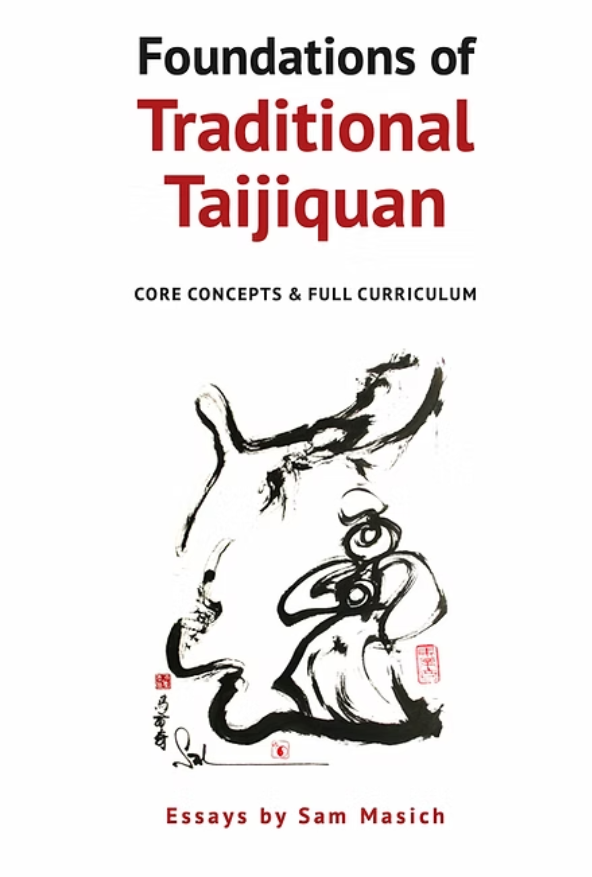
I consider Sam Masich to be one of the best tai chi communicators I have ever met. His Foundations of Traditional Taijiquan book may be a little too theoretical and dry for some but it is extremely well researched and insightful. Where Sam really comes alive is with his more “informal” communications such as his substack blog and YouTube videos that you can find on his extensive website. You could even try his digital video downloads or zoom classes if you want to branch out! I have been lucky enough to attend some of Sam’s workshops, and am consistently impressed by his ability to summarise, simplify, explain and translate “across the cultures” for a western audience. Sam is a man who seems to effortlessly cut through the tai chi jargon and is someone who is well worth following.
A Tai Chi Imagery Workbook: Spirit, Intent, and Motion by Martin Mellish, is a novel approach to the subject with a book that truly is accessible to Western readers. Visualisations and “intent” are core to tai chi. However in order to use the traditional visualisations for practical tai chi benefit, a Westerner needs to understand the historical culture of China 400 years ago — a big barrier for most westerners. Martin Mellish’s book throws off these doctrinal shackles by realising that it is the visualisations that are important not the Chinese cultural understanding (although he modestly and respectfully declines to point this out). The visualisations were originally created from everyday actions so Martin skilfully recasts them using modern everyday Western culture. The power of Martin’s book is that he authoritatively collects many of them together as the perfect resource for tai chi practitioners and teachers alike. This book will make you think and I guarantee it will spark at least one mini eureka in everyone who reads it.
Wider context
Daniel Reid’s A Complete Guide to Chi-Gung. This was really the book that motivated me to become a regular and serious practitioner, rather than just going along to the weekly classes as a bit of a hobby. Qi Gong is all about breath control, meditation and understanding the body and as such is really the root of all the internal arts. Daniel Reid has produced a well-written and authoritative guide, which I found extremely helpful in understanding the theory behind the techniques I was being taught in classes. If nothing else, this book will open your eyes to the serious intellectual effort that has been devoted to “cultivating the breath” over the centuries. Daniel has done a great job of making the book accessible and inspiring, but it must be noted that he does occasionally step outside of his core area of competence, and makes a few science gaffes, however these can safely be ignored and detract little from the vast majority of the content.
This has a more autobiographical flavour, with There Are No Secrets: Professor Cheng Man Ch’ing and His T’ai Chi Chuan. Wolfe Lowenthal tells of his personal experience studying under Cheng Man Ch’ing in New York in the 1960s. Cheng Man Ch’ing is really the first Chinese master to begin to seriously spread tai chi in the West. In many ways he is therefore the founder of what some might consider the beginning of the Chinese enlightenment of the West. The book is a deeply personal story filled with insight and core teachings. As the title says, this book really brought home to me how ultimately the internal arts are quite simple. The lessons you are taught on day one of your tai chi class, are the same ones that are taught to advanced students with decades of practice behind them. Unfortunately therefore you can be preached at as much as you can take, but the only way to actually understand is to experience it yourself — and the only way to experience is to practise. There are no secrets, only dedication (if I do find a short cut I promise to blog about it!).
The Power of Internal Martial Arts and Chi: Combat and Energy Secrets of Ba Gua, Tai Chi and Hsing-I by Bruce Frantzis. This book is THE encyclopaedia and a must-have. I cannot recommend it enough. Bruce Frantzis has really made the martial arts his life since a young age, studying and training all across the globe. The book is well structured and filled with personal accounts and stories from his time with a bewildering array of masters. Every term is introduced with a little explanation and is thoroughly indexed. Unlike many of the tai chi and internal arts books out there Bruce Frantzis does not have a particular devotion to a specific style or system, and his explanations and discussions are only enhanced by this multidisciplinary approach.
Wong Kiew Kit’s The Complete Book of Tai Chi Chuan: A Comprehensive Guide to the Principles and Practice is a book in a similar vein to Bruce Frantzis’s (above), but from the traditional Chinese perspective. Wong Kiew kit is also extremely well versed in the subject having been born into the tai chi lineage and immersed in the traditional culture. He writes with authority and in an accessible and friendly style limiting his discussion to the world of tai chi (he has many other books as well). I personally believe that this book provides the reader with a sound grounding in the traditional Chinese tai chi heritage, history, techniques and teachings.
Clothing and equipment
I have found both Playwell to be good online sources of specialist clothing and equipment. Many people I know also recommend Tai Chi Link as a reputable website worth browsing.
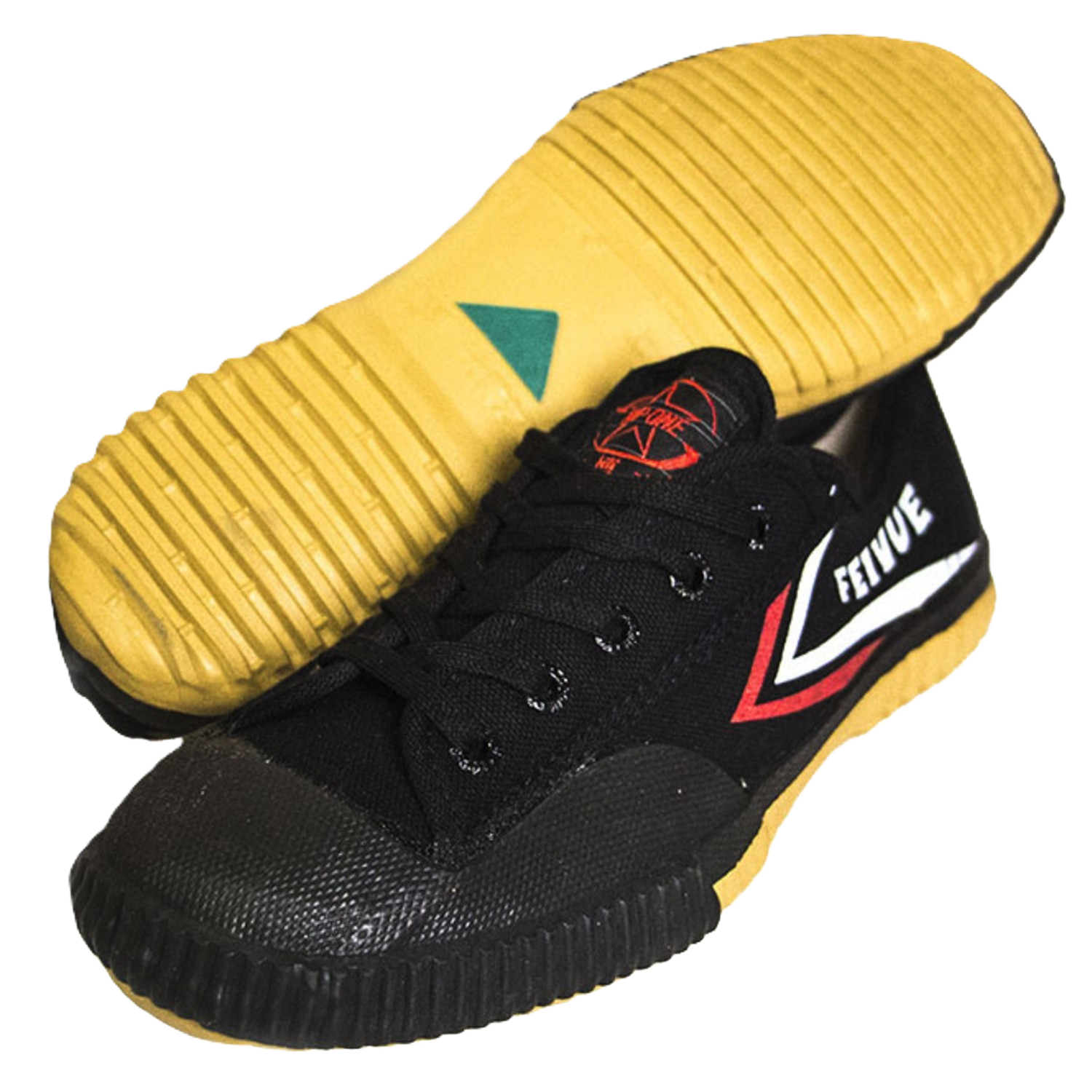
Shoe wise the classic tai chi shoe is by Feiyue who are the market leaders. A large number of people swear by them and they are quite affordable. Their main feature is the curved sole that allows you to grip the ground easily even in low stances.
Other teachers
My teacher, Master Wang Haijun. By learning with me, you may also subsequently have the opportunity to join Master Wang’s monthly seminars directly, should you be interested.
Other (local-ish) tai chi teachers teaching the same style, who are also students of Master Wang:
My own personal (now dormant) tai chi blog where I focus on my particular interest of trying to interpret tai chi from a scientific perspective.
FAQs
What are the class details again?
Weekly on Tuesday nights, 8:30pm in the Milner Hall, central Winchester. £8 per hour payable in advance in blocks of 10 weeks. Full location details and other practicalities on the Classes page.
Do you teach at other times or during the day?
I'm afraid not. I teach on a part-time basis, and so do not run classes during the daytime or on other days / locations. I’m also sorry that I do not offer private tuition.
I am already experienced or not experienced at all
The beginners classes are suitable for people with no prior experience of tai chi. Even if you have done tai chi before, it will only be possible to move straight into the experienced class if you have previously practised the particular style and form of tai chi I teach. This is Chen Style Old Form (74 step Lao Jia Yi Lu). Here is a YouTube link to my teacher’s teacher demonstrating it.
I'm concerned about my fitness levels
If you have a fitness, injury, or health concern about whether you will be able to attend the class, I cannot offer specific medical advice. My guidance is usually that if you would be happy going for a brisk walk, or having a gentle dance, you will have no problems in the class. It is always possible to perform the moves more gently and slowly, and adapt to your own body and capabilities. Equally you can always stop or opt out at any time. One of the major benefits of tai chi is to improve health over time from whatever level you start, hence it is suitable for the vast majority of people at any age. Of course the only way to know is to try it and see if you find it beneficial.
I don't seem to be getting it!
One of my long-standing students made the observation that most people start tai chi expecting it to be easy — only to discover they have difficulty learning the movements. But the assumption persists, leading to a feeling of embarrassment. Tai Chi is simple, but not easy. Everyone feels lost in the beginning — do not worry. This feeling is particularly strong in the first few months when there is a steep learning curve. Missing classes (particularly consecutively) can result in feeling “left behind” and potentially giving up. Everyone learns at their own rate, depending on the amount of time and practice they put in. You are not in competition with anyone. You are not embarrassing yourself or letting anybody down. If you enjoy it and want to learn, just keep trying. Tai Chi is a forever journey — you will always be trying to get better than you are.
I don't really know what I need to practise at home
It is common for many people to say they "don't know what to practise", "can't remember the moves", or "wouldn't want to risk practising the wrong thing". My view is that the important thing is to try. Maybe you will get it wrong in the beginning, but you will get better over time. That's completely normal. There will always be something you can remember, even if it is just to stand and breathe. Practise what you do know, rather than worry about what you don't.
There is only one way to get better at Tai Chi. Like everything, it is to practise, and practise regularly. If you are making the commitment to come to classes, I strongly recommend you also make the commitment to practise at home, at least to some degree, even if just a couple of minutes each day to begin with.
What is chi (or qi) energy?
You could fill an entire library with books that have been written on this subject, so this short paragraph isn’t really sufficient! Many monks, and others, have dedicated their lives to studying it, so you will get as many answers as there are tai chi practitioners.
My personal current understanding is that it is best thought of as similar to an emotion. Emotions have physiological effects on the body and vice versa e.g. getting tense when stressed. An emotion is an abstract thing that can’t be measured directly, but it can be felt, it has characteristics and effects and we can easily talk about it. If asked “what is love?” the same answer applies: uncountable libraries of books have been written on the subject, yet you can't easily point to it or define it, and it is somehow subjective and personal to you.
I think of chi as something like the feeling of healthiness or the feeling of being alive. The language of feeling the chi is therefore a framework for communicating the feelings and sensations within the body. There is nothing mystical, it is just a way to talk about sensations. What does it feel like to be alive? Is all my body equally alive? And can I change or move my aliveness around? Mmmm… I need to think about it a bit more…




 Please contact me using the form for more information, and I will be delighted to help you. If you have a question do check the FAQs page.








 Shoe wise the classic tai chi shoe is by